Showing posts with label vacation. Show all posts

Thursday, August 14, 2014

Other stuff to do with kids in Mexico City

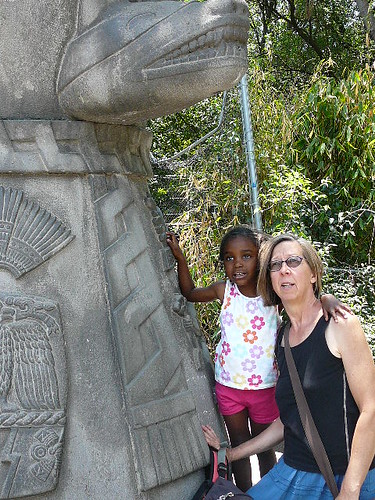
Recently we took our seven (nearly eight) year old granddaughter to Mexico City for a week and several folks have expressed surprise that there was anything for a child to do there. In fact, it was the second time we'd taken her to Mexico City - the first time she was four - and there are plenty of things to do with young kids. Moreover, the subway system makes the city super easy to get around, at least for most tourist purposes.

I've already written about Mexico City's wonderful children's museum, El Papalote, which ended up absorbing a couple of days of our most recent, kid-centric trip. Here are a few other kid-friendly things to do in El D.F.:

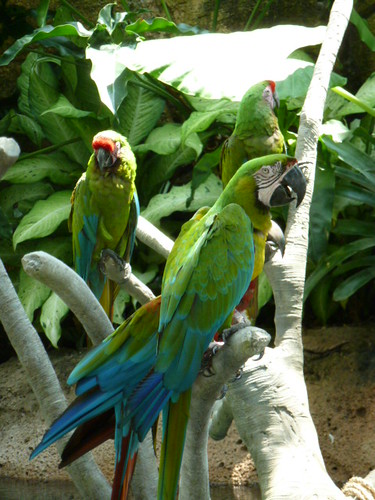
Zoo in Chapultepec Park
The zoo in Chapultepec Park is excellent - probably too big to get through in a day with a small one - and makes a great in-city day trip. It's easy to reach via the metro. It's a short walk from the metro stop to the zoo entrance but you can ask anyone for directions or, on weekends, just follow the crowd with kids who migrate there in great numbers every Saturday and Sunday. The zoo is free but some special exhibits require a (relatively cheap) ticket. There's a food court on the grounds; skip the US brands there and go for the Mexican sandwiches, tacos, etc.. is my advice.

Alternatively, the exit to the zoo dumps you out next to several rows of food booths where you can eat comida corrida style (a cheap, fixed price, multi-course meal). There's a little merry go round there, a mirror maze, a playscape, and small train that circles around part of the park that you can get on near the food stalls. My suggestion: Get something at the food stalls in the zoo, look at animals till you've worked up an appetite, then head to this food area for a satisfying late afternoon meal in a relaxed atmosphere where there's something for kids to do.

Be forewarned, the main paths to and especially from the zoo and in Chapultepec Park generally on the weekends are lined with innumerable vendors selling snacks, drinks, trinkets, face paint, plastic superhero or princess-themed toys, etc.. Consider yourself miraculously lucky if you get past them without reaching into your pocket. (And some items, like face paint or agua frescas are hard to say "no" to on a fun family day.) For kids old enough to add and subtract, consider giving them a small sum they can spend on trinkets or snacks every day and let them choose what it is. It's inevitable, so why not do it in a way that teaches some responsibility and leaves you out of the decision making surrounding every 10 peso transaction? That strategy worked out well for us on our most recent trip.

The Zocalo
The zocalo in Mexico City is a massive open square  with a large cathedral on the north side and the national palace on the east. There's no telling what's going on there on any given day, but there's usually something. The church is worth visiting and the sidewalk outside includes not just the usual trinket and snack-sellers but opportunities to receive a shamanic blessing by women in traditional native garb waving smoldering handfuls of sage around their customers.

The Diego Rivera murals in the national palace may be about all the art viewing many young ones can stand. We found that, with some effort, Ty could follow the grim storyline Rivera related about the Spanish conquest and the people's uprising during the Mexican Revolution. But she was more interested in the (admittedly amazing) cactus garden behind the small courtyard housing the famed murals. In the daytime, take a frisbee to throw out in the square, or maybe a kite, for the bold - there's a surprising amount of wind there most times of year.

For us, though, the best part of visiting the zocalo was at night. Here's how I described these outings in another venue:
Just for fun, we took some light-up garb with us to Mexico City to the zocalo after dark: The granddaughter's hoodie with EL Wire stitched around the edges, a few dozen small glow sticks, a couple of balloons with flashing RGB LEDs inside them, and three battery operated EL Wire strands long enough to use as a jump rope, one of which ended up lining a hat. Folks approached in gaggles wanting to buy one or the other of the light-up goodies, with somebody offering five times for a strand of EL Wire what I'd paid for it. We gave away glow-stick bracelets to the kids and referred would-be customers to the websites where I'd bought them. (This was a great way to meet families with kids, btw.) When it was bed time, the young'un gave away the balloons with flashing LEDs to a couple of little girls in the square and distributed the last of the glowsticks to a passel of teenagers before she turned, hoodie flashing, and we walked back through the seemingly ever-present multitude to our hotel.
The walk from our hotel to the square was a pedestrian-only street jam-packed with people. Every few yards you'd see people elaborately dressed as cartoon characters, superheroes, or monsters looking for people to pay ten pesos (about 77 cents) to take a picture with them. You can get an ice cream or other sweet and walk up and down people and building watching, window shopping, and soaking in the experience of being in the center of one of the planets most populous, vibrant cities.

Teotihuacan
A visit to the pyramids at Teotihuacan is a standard tourist day trip from Mexico City. But I must confess, I have mixed feelings about taking young kids to ruins sites. Ty has been to both Teotihuacan outside of Mexico City and to Chichen Itza in the Yucatan. Chichen Itza was a complete bust - she was more interested in the bark on the trees than the pyramids we were there to visit. Teotihuacan, too, was a little much for her. She was interested at first and had fun climbing over and under things, where it was allowed. But the outing took too long and by the end we had quite a grumpy girl on our hands. OTOH, she remembers both outings fondly, especially Teotihuacan, and her account of the episode after the fact included none of the complaints that seemed to dominate the day. Go figure.

The problem with taking kids to such places is they have no history nor context for what they're seeing and there are more things they can't do ("don't climb," "don't touch") than things they can. If you go, take snacks, water and head coverings (no shade at Teotihuacan), and maybe a ball, frisbee or other toy for a bit of play time.

Market day
I'm sure locals become numb to the experience, but to me, after dozens of visits over the years, a large Mexican market is still like a wonderland - certainly that's true the first time you go through it. There's a large market just southeast of the zocalo in Mexico City that's perfectly located for the first-timer or the hundredth alike, but of course there are many others scattered around the city. Be sure and ask a local for a recommendation and travel directions, though. Some are sketchier than others.

Shop for whatever you're personally after but stop whenever the young one wants to look at toys, snacks, etc., she potentially could afford. After all, what's the use of walking through a wonderland if you're not allowed to stop and gawk? Pro tip: Give the kid a (slightly larger than the usual daily) allowance and tell them they get to decide how to spend it. Then you're not to blame when they can't have something. And don't forget you can buy ridiculously inexpensive kids' clothes while you're there, much more cheaply than even discount stores in the states.

Eat a big breakfast before you go then in the afternoon eat comida corrida in the market. If you're still hungry, there are dozens of stalls with treats, fruits, and all manner of goodies that will delight any palette. Don't neglect the street stalls surrounding the market; if it looks clean and there are lots of locals standing in line, it's a pretty good bet.

If you're staying somewhere with a kitchen, consider spending an evening where you buy food from the market and cook it yourself (ideally channeling your internal Diana Kennedy). Most American kids aren't used to seeing food that fresh go straight from the butcher or the farmer's stall to the dinner table and it'll memorably reinforce what they saw during their market visit.

Xochimilco
When the Spaniards first arrived, Mexico City was built on a lake and the Aztecs moved people and goods about the town through canals on barges and boats. Today, Xochimilco on the outskirts of town is one of the last areas where the old canals still stand. Saturdays are the big day when there are lots of food vendors and mariachis in the water. We didn't go this time but took Ty when she was four. Great family atmosphere. You can rent a boat (including somebody to row) and take a tour up the canals, buying food from boat-bound vendors (or bringing your own) and paying for the occasional tune or three from mariachi bands floating in their own boats alongside you in the canals. This area is filled with flower nurseries and you can stop whenever you want to look at them, have a picnic, etc.,  though of course be careful of US import restrictions if you decide to buy any flora. (Cut flowers to spruce up the hotel room can be nice, though.) A trip to Xochimilco makes for a lovely, unique family afternoon and getting there is pretty easy via public transit, as described in any decent guide book.

KidZania
We ended up not going because of time, but the KidZania franchise started in Mexico City and has become a mainstay of local kid entertainment. Our hotelier with a young kid and some of their staff with children highly recommended it, though looking online there are criticisms about excessive commercialism, etc.. Somebody must like it, though. Franchises have sprouted up all over the planet and locals say their children enjoy the place. Maybe next time.

Eating out
The good news: In Mexico, there's seemingly no such thing as a non-kid friendly restaurant. If you want to go there, odds are nobody will think twice if you bring your children with you. There are numerous, terrific breakfast places in El Centro, as well as spectacular bakeries. Also, the coffee situation has much improved: Nescafe is becoming rare (previously the only version of coffee you could get) and there are even Starbucks dotting the landscape here and there.

You can't go wrong taking a young'un to the tile-covered Sanborns across from Bellas Artes, with its amazing floor to ceiling murals and fun kids' dishes. (The food is good but not spectacular; you're going for the atmosphere.) When we were there three years ago, one of the waitresses wanted her picture taken with our granddaughter. When we returned this time, she recognized her, gave her lots of hugs and attention, and asked us to return the next day when she brought the old photo and had Ty write her name on the back and take another one. Utterly charming.

We also enjoyed Cafe Tacuba, a beautiful old place filled with lovely paintings, murals and an amazing array of stained glass art over the front door. The mariachis there were excellent, as was the food. (In recent years, I've begun skipping Plaza Garibaldi for listening to mariachis - there are typically fine groups playing in and around many restaurants and Garibaldi, while famous, has become a bit seedy if you're taking kids, recent government efforts to renew the area notwithstanding.)

If you choose, you can spend as much money on a meal in Mexico City as one might in a fancy restaurant in New York or London. However, some of the best eating in Mexico happens at food stalls on the street or tucked away in the markets. Perhaps my favorite meal of the trip was when Ty and I got giant, delicious quesadillas filled with chicken, queso and and a thick tomatilla sauce and ate them in the park. Afterward, we played hide and seek for a bit, then she took off her shoes and played in a fountain with a couple dozen other kids. I wouldn't have traded that afternoon for the finest gourmet meal in the city.

Traveling with kids: A philosophical choice
The missus and I have a working theory about traveling with kids. If you're going the bring them on vacation, the vacation is going to be about them. Sure, we might enjoy visiting the National Anthropological Museum or the Modern Art Museum in Mexico City, both of which are spectacular. (We've returned to the Anthropological Museum repeatedly as we've traveled around Mexico and learned more indigenous history; a lot of the best artifacts from every corner of the country are there.) Over the years, we've spent lots of time walking around outlying neighborhoods, visited Frida Kahlo's home, the wonderful Dolores Olmeda museum, and even the house where Leon Trotsky was assassinated. But such outings won't hold a young child's interest for more than a few minutes. After that, every moment can be a struggle if a child is bored or just doesn't want to be there. Force the issue and it's easy to make everyone miserable.

If, on the other hand, you plan a trip around the child's interests - the children's museum, the zoo, playing in the parks, etc. - they'll enjoy the trip more and you'll enjoy your time with them. Some of your time will be eaten up by activities that you might not have needed to leave home to do. Playing hide and seek in the park isn't a Mexico-City specific activity, after all. But it does make for a fun vacation, if fun is what you're looking to get out of it.

Sunday, July 27, 2014

Postcard from El Papalote

As the grandfather of a nearly eight year old girl who begins a Thinkery camp on Monday, I've spent more than my fair share of time in recent years at children's museums in Austin, Houston, San Antonio and beyond. But the Museo de Niños in Mexico City, universally called El Papalote by the locals, hands down is the best I've seen.

It was big enough and diverse enough that it merited consecutive days visits in a one-week, kid-centric vacation from which I've just returned, an outing that also featured one day visiting the nearby zoo there in Chapultepec Park.

Americans don't think of Mexico City this way, but it's really in many ways a child/family oriented town. Look in most guidebooks and the Museo de Niños may get a one paragraph description, though for families with younger children visiting it's one of the best outings in the city. When we returned to Texas, the first things the child wanted to tell her mother about the trip all were exhibits from El Papalote.

El Museo
El Papalote is much bigger than other children's museums I've encountered. There are several buildings of exhibits, two theaters, three outdoor playscapes for kids of various ages, massive outdoor interactive water features, a food court, and best of all the place is staffed out the wazoo, with a much higher staff to child ratio than I've seen anywhere else, particularly considering the place was packed both days we went. The extra staff made a huge difference. Sometimes when families are around each other too much - like on vacation - children may not always care to listen to the adults closest to them. But the friendly, young staffers with a green vest and big name badges seemed to expertly coax the kids into appreciating and participating in the science themed exhibits.

They did a good job of giving kids something to do in each exhibit. For example, a two story contraption transported 12-inch solid plastic balls up and down from the first and second floor using only kid power from three sources: a hamster-wheel like contraption that powered the drive train and two more areas upstairs where kids reinserted balls from the top, via a hand crank and a game where you balanced the ball on a board around obstacles to get it in a corner hole.

Another exhibit features streams of colored light falling like rain on the wall that seems to slide off the sides of kids' shadows, accumulate within the neck and shoulder or a bended arm. I'm not sure myself how that thing worked, but it was really cool. (The Austin children's museum has an exhibit where they freeze one's shadow on the wall at the end of a countdown, and come to think of it I don't understand how that works, either.) This is a standing feature; it was there when we visited three years ago.

Perhaps the youngun's biggest favorite was a presentation on pressure, showing how one nail may pop a balloon but the presenter could place the balloon on a bed of nails and lean down on it with all her weight without popping it. The point was that the weight was distributed among and thus divided by the total number of pressure points so that any given nail didn't penetrate the skin. They invited kids and parents alike to lay on the bed of nails, which could be raised and lowered through holes in a stiff plastic sheet on a specially built rectangular table top. She was scared at first and didn't quite trust the science she was being told, but "laying on a bed of nails" was right up there among the her highlights from the trip.

The Target Audience
We'd taken the child to El Papalote three years ago during her fourth summer and the differences between a four and seven year old are great. But she found things to do both times - different things interested her, as one might expect - and on both trips she considered it a highlight. By my observation, the more complex exhibits could accommodate kids up to maybe 12 years old; teenagers would probably soon get bored. Or hired. The staff was young, though they did a good job.

It certainly helps the more you speak Spanish. All the instructions are written in Spanish as are the presentations by staff. But if you've got a smattering - in our family, I can get by and the young'un is more fluent than me - there's plenty there to enjoy. And there are a good stock of under-utilized staff wearing "I Speak English" buttons. There are so few English speakers it was like having concierge service. Even so, the excellent service we got because of the novelty of English speakers' presence underscored the extent to which this is a place intended for Mexican children, not necessarily the tourist crowd, which perhaps is why the guidebooks short shrift it.

Getting there
You could take a cab there but I don't always trust them and personally prefer the subways, trolleys and buses for most day-to-day travel when visiting Mexico City. Plus, kids love trains. I looked through a half dozen guidebooks in our hotelier's bookshelf and none of them had good directions to the Museo de Niños, which is a bit of a trek from the main entrance to enormous Chapultepec Park. Here's the best route we found:

Get on the subway from wherever you're staying, find your way to the number 7 (orange line) toward Barranca del Mureto and get off at the Constituyentes stop. As you come up the stairs and out, turn left, go upward, and turn left again, ascending to a green pedestrian overpass that'll get you across a busy road (they'll also sell you a great quesadilla or sandwich on the way, too, I should add). From there, you walk forward past the presidential residence (a day care named Jardin de Niños is on the other side of the street) and just past it on the right you'll see a second, larger overpass that leads you across Ave. Constituyentes  and to the Museo's back door. When you exit the pedestrian overpass, go forward, keeping the yellow building on your left. Walk up the drive and the next left gets you to the main entrance. Avoid the temptation to continue along the highway after the second pedestrian overpass - that way will get you there but add a third of a mile or so to your walk.

Other Logistics
Entry fees are higher depending on whether you see a movie or other performance in their theaters, but the basic entry fees sans movie was about $10 or so (American) per head, so in the scheme of things quite reasonable There's street food all along the path or you can eat inside from decent chain restaurants - some American, some Mexican - in the food court, though even the Mexican versions of US fast food purveyors tend to have menu items one hasn't seen in the states.

One caveat. If you leave between 5 and 7 p.m. on a weekday (the museum closes at 7), you'll hit rush hour when you get to the train headed home. This is doable but potentially stressful and a much different experience than riding around the subway in half empty cars during the day. Small children may need to be picked up to avoid a scary crush when the crowd begins to really pack in. Everything will work out and other passengers will help protect the child if they know what's happening, but I mention it to advise that you prepare yourself and your kid for the experience. Our granddaughter was freaked out when so many people began pouring onto the train and did not stop.

Transportation logistics aside, the Museo de Niños is a great antidote for kids bored by one more trek to visit ancient ruins or who only barely tolerated being dragged through the (wonderful, but grown-up) National Anthropology Museum, also in Chapultepec Park. If you're going to impose a visit to Frida Kahlo's residence, make them view Diego Rivera's wonderful but ghastly murals in the National Palace, or force them to climb the pyramids at Teotihuacan though no one can tell them who lived there, the least you can do is throw them a bone and take your kid someplace that's expressly for them. El Papalote fits the bill.

MORE: I forwarded this post to the contact email for the museum and a gentleman named Daniel Elizondo emailed back to say, in part, that "We know it can be hard to get to the Museum, we are working on different solutions that will facilitate transportation and connection with the rest of Chapultepec." That would be helpful, it's a big place! Two suggestions: 1) Try to reroute or expand the little white train that runs through the park to serve as a de facto shuttle for the Museo, the zoo, and other kid-related stops, and 2) Improve (i.e., install) signage from the Constituyentes metro stop, maybe even spending a little promotions money there. It's only a short walk but unless you know where you're going, the path is not obvious.

RELATED: Other stuff to do with kids in Mexico City.

Wednesday, December 14, 2011

Facing middle age, or, procrastination on a rainy December day


On a rainy December day I enjoyed thinking back to our trip to Galveston this summer.


Not to mention our trip right after session to Mexico City:


 Not so nice here at the moment. We need the rain, but the gray weather's a bummer.

Saturday, April 23, 2011

Drawing conclusions about illusions and the failure to perceive them

Over the past few months, based partly in an ongoing interest in the brain science behind eyewitness errors, partly on being immensely impressed with the related artwork by Salvador Dali I saw in Berlin and Spain last year (e.g., at left), and partly thanks to the need to generate ever-new drawing projects for my 4-1/2 year old granddaughter, I've been teaching myself to draw rudimentary optical illusions (sometimes while sitting in lengthy committee hearings at the Legislature waiting for a bill to come up). In furtherance of that effort I purchased a slim book by a fellow named Robert Ausborne titled  "How to understand, enjoy and draw optical illusions," which was a good starting point for a ham-handed beginner.

One thing I've learned through this process is that, for whatever reason, I cannot see certain types (but not all types) of color-based illusions, in particular so-called "afterimage" illusions, which is when you see the negative or complementary color, i.e., the color across from it on the color wheel, after staring at an initial image then looking at a neutral color. (See examples here and here.) I understand them. I can even create afterimage illusions others can see (it's easy on Photoshop following Ausborne's instructions: With the image in an active layer, perform the following commands: Image > Adjustments> Invert). But as I wrote to the author, "I have discovered that, no matter how hard I try, I cannot see after image illusions … EVER … having now looked at dozens of examples, and comparing notes with my wife (who does see them). I’m not color-blind and my eyes react to illusions based on shading tricks, but I don’t ever get an afterimage." He graciously replied:
The question you ask is a good one.   While I am not a scientist, but as a long suffering, pestering enthusiast I can offer up anecdotal evidence.

The most obvious demographic quirk I've noticed about illusions is age.  The young quickly realize almost all illusions with no trouble at all.  They seem to walk into them guileless.  The older a witness is the harder it becomes.  You don't see that many optical illusion shows in Florida.

As for After-image illusions.  My own research has turned up several factors which affect the ability to "see" them; such as heredity, eye color, color blindness, and a host of other vision problems, including bad lighting.   I have never found a definitive answer and suspect that nobody really knows.  Perhaps you were born with an extra supply of photo chemicals, and just don't run dry that easily.  Perhaps your eyes have an Indianapolis 500 Pit Crew and the photoreceptors are replenishing too quickly.  Perhaps your eyes are making tiny movements which are undetectable, thus making it difficult to expose a single patch of neurons to the illusion.  Perhaps you are an alien plant, and have just inadvertently given humans a sure fire test to discover and weed out your kind.

As an artist who draws illusions for a living I can tell you that it is possible to oversaturate oneself with an illusion.  Most illusions do not stop working while I draw them, and with some illusions it can be like trying to paint a leaf while it's falling; as things tend to wander out from under my eyeballs.   But with some illusions I can become burnt out; I just can’t see them easily anymore.  I run the risk of ruining the illusion, making it too obvious by far in order to stimulate my own burnt out senses.  The reason for this phenomenon may be that we are human; we learn.  The brain adapts.  Just as the brain can make your nose invisible to both eyes, it can make an illusion invisible, once it figures out you don't really need to "see" it.   Perhaps you are just more adaptable than the rest of us.
I appreciate the author's response, and he's probably right nobody knows. I'm still curious about it, though.

I've been interested in how we see color ever since learning with fascination and borderline envy about synesthesia and how differently synesthetes see and interact with colors (which are often associated with numbers, music, or other mathemtaically based facets of life). Then, in researching eyewitness identification in a criminal-justice context, I became acutely aware of just how little of the world around us our eyes actually see and how much is filled in by our memory. That's why eyewitness accounts are extremely reliable when people previously knew the person they're identifying, but exceptionally unreliable when trying to identify someone they'd never seen before. Writing in the June 30, 2008 New Yorker on an unrelated topic (itching, to be precise), Dr. Atul Gawande described the nuts and bolts of vision mechanics that explain why that's the case:
The images in our mind are extraordinarily rich. We can tell if something is liquid or solid, heavy or light, dead or alive. But the information we work from is poor - a distorted, two-dimensional transmission with entire spots missing. So the mind fills in most of the picture. You can get a sense of this from brain anatomy studies. If visual sensations were primarily received rather than constructed by the brain, you'd expect that most of the fibres going to the brain's primary visual cortex would come from the retina. Instead, scientists have found that only twenty percent do; eighty percent come downward from regions of the brain governing functions like memory. Richard Gregory, a prominent British neuropsychologist, estimates that visual perception is more than ninety percent memory and less than ten percent sensory nerve signals.
So memory is filling in most of the image you see when you "see" something, which is why eyewitness errors are much more likely when identifying strangers. As for the optical illusion: No wonder most people see afterimages if our memory is generating 80-90% of our visual perception. Your brain is busy filling in all the gaps in the image you're looking at, and when it's taken away it can't immediately shut down that extraordinarily complicated function. Who knows why I'm an exception, but there always is one. I'd still like to know.

Monday, November 22, 2010

The hedge maze I've always wanted

I've always wanted a hedge maze. I've teased my wife that it should be the next thing she adds to her already extensive garden, to the point that it's become a years-long running joke. Then we visited Park Laberint D'Horta in Barcelona, pictured below in a photo taken by either Kathy or me.


Park Laberint d'Horta


Just a dream come true. I absolutely loved it. The maze was deceptively large and somewhat difficult, though trial and error would eventually let anyone out without too much trouble. Leaving after you'd found the center was actually more difficult than reaching the middle in the first place. Here's another view:


Park Laberint d'Horta


And another:


Park Laberint d'Horta


When you reached the center there was a small circular area surrounded by tall shrubbery with multiple exits, along with this grotto:


Park Laberint d'Horta


Remarkably, though it's difficult to tell from the photos we came back with, the rest of the park was perhaps more impressive, even, than the portion with the Labyrinth. The place was filled with intimate little grottos like this one brilliantly designed to encourage private moments even when the gardens are filled with a large crowd (as it was for part of the time we were there).


Park Laberint d'Horta


And here:


Park Laberint d'Horta


And here:


Park Laberint d'Horta


And here:


Park Laberint d'Horta


The place was a former estate from some royally endowed late 18th century fiefdom, from whence period the hedge maze and gardens date. I should add that they were only barely keeping the place up to the level it deserved, doing minimal upkeep and watering but perhaps not in the most efficient, effective or professional manner. Having visited Kew Gardens outside of London earlier in the trip, which admittedly may be an unfair comparison, the differences in the levels of upkeep weren't even close, and there were portions of the garden that would have been even more spectacular if they'd been kept in top-notch shape.

That's nitpicking, though. If I lived in Barcelona I'd go to Laberint d'Horta all the time. It'd be a great place to take kids and let them run around, and a spectacular place for picnicking. On the day we went they required no fee, so the whole visit cost us the sum total of subway fare to get there and the cost of a few snacks picked up at a local market for the occasion.

Wish I were there right now.

Saturday, September 11, 2010

Cool Graff

I just thought I'd post a few examples of cool graffiti we've seen here and there while on vacation. Here's a massive spaceman several stories tall in the Turkish quarter in Berlin:


And here's another cool bit of graff covering a metal door of a quite industrial building in Berlin:


This fun graff can only be seen from the highest point atop Parc Guell in Barcelona, which means only an intrepid few who hike to the top of the mountain ever see it:


The park below the precipice from which this photo was taken contains several buildings and structures designed by the (astonishing, half-crazed) Antoni Gaudi, which is what most people are there to see.

Barcelona has the largest quantity of high-quality street art of any city I've ever visited. There are multiple books available for purchase featuring literally thousands of photos on the subject and there are full-blown graff murals throughout the narrow, winding streets and on every underpass I've seen. Last night (regrettably we didn't have the camera with us) we ran across about 8-9 excellent murals, all apparently done illegally (you can tell the commissioned stuff because the topic relates to the businesses) painted on the metal doors shop-owners pull down over their entrances when they close up at night. Without question, I've seen art in high-class museums on this trip that I didn't enjoy so much.

Wednesday, September 01, 2010

Loving Berlin

One goes to London to see and learn about things that are old - the history, the architecture, religion, etc.. In Berlin, it's alll about the new: New architecture, art, fashion, attitudes. An aura of individualism, youth and cutting edge ideas imbues the city like exotic spices infuse food from the vibrant Turkish quarter of this extraordinarily international town.

Western developers for years had been eyeing the no-man's land between East and West Germany before the wall fell and and today near what used to be "Checkpoint Charlie" you'll huge, impressive, glass and steel monuments to western capitalism with no trace of the old divisions beyonnd a few out-of-the-way memorials and a bizarre tourist-trap set-up where people get their pictures taken near a mock-up of the old sign, "You Are Now Leaving the American Sector."

This town is full of museums, restaurants, monuments and other touristy spots, but one is most impressed, perhaps, by the city itself - the cosmopolitan crowds, the cutting-edge architecture, and the huge areas of green space everywhere. It's flat as a skillet and perfect for bicycle riding - particularly compared to hilly Austin where biking is great for bulking up your calves but not really a viable way for average people to get around when the weather's hot. While we've been here (in late August and early September) the high temperatures have been in the 60s - a little cold for Kathy but right in my wheelhouse.

Word War II and the Cold War left a scar on this town's psyche which in  many ways still defines the city, if only by what its denizens are AGAINST (which typically defines people much more than what they are FOR.) There's a disdain for conformity and a celebration of diversity and individualism that's striking and rather extreme, even coming from the United States which of course fancies itself the global bastion of individualism. On that score, though, Berlin's got us beat by a country mile. I think it's because the last 20 years in the city have been defined by a reaction against East German/Stasi authoritarism. The folks who brought down the Berlin Wall - and most especially their children, who have never lived under dictatorship - have embraced the "Never Again" slogan, which European Jewry adopted after World War II when establishing Israel, and are building a new Germany here whose values and approach to living is antithetical to Nazi and Communist totalitarian rule. That's an impression from a visitor, not a learned  historical analysis, but it's difficult to otherwise explain the vibrant dynamism we've witnessed in every corner of the city we've visited..

I really like this town. Kathy suggested I might like to come and live here for a while, and (as usual) she's probably right.

Wednesday, August 25, 2010

Weather gloating

We picked the right time of year  to get out of Austin. When Kathy and I arrived in London this morning it was 55 degrees Fahrenheit, and it probably never got over 72 all day. This evening when I got online, I noticed yesterday's high in Austin was a whopping 104 degrees. Though it rained in London today, I was so thrilled at the 50 degree drop in temperature I could care less. In Germany, where we're going next to visit one of Kathy's close friends, we  were told to bring sweaters and other warm clothes.

London is an amazing city. Like New York, Paris, or Istanbul, there's more to see and do here than you can reasonably attempt in just a few days. When we got here today I took a nap for a couple of hours to combat the jet lag, then we spent the afternoon visiting the city's oldest functioning church, St. Bartholomew's, the Museum of London (focusing on the history of the city), and then stopped off at St. Paul's Cathedral, where we were treated to an organ-accompanied choir. We had dinner at a Lebanese restaurant that far outclassed the Middle Eastern food we can get in Austin, sad to say, which of course is one of the reasons you come to a cosmopolitan city like London. Tomorrow we should both be over our jet lag and able to get a full day of touring in.